ADA Signage Requirements For Public Parking Lots in Ohio
Unlocking Accessibility: ADA Signage Requirements for Public Parking Lots in Ohio
Navigating public parking lots can be a challenge, especially for individuals with disabilities.
Accessibility isn’t just a courtesy. Accessibility is a legal and social obligation that ensures everyone, regardless of ability, can navigate public spaces safely and independently. For Ohio businesses and property owners, making parking lots accessible isn’t optional it is required by law.
Learn About Our Parking Lot Striping Services
To ensure that every visitor enjoys equal access, Ohio has established crucial ADA (Americans with Disabilities Act) signage requirements. A key part of compliance is proper signage. Which not only guides visitors but also protects property owners from costly penalties. Understanding these standards not only enhances accessibility but also fosters an inclusive environment for everyone.
Let’s dive into what you need to know about essential ADA signage requirements and standards for your public parking facility in Columbus.
Understanding the ADA and Its Purpose
The Americans with Disabilities Act (ADA) became law in 1990 to prohibit discrimination against individuals with disabilities. This sweeping legislation applies to all businesses, public facilities, and transportation systems, including parking lots.
ADA-compliant parking isn’t just marking a few spaces with a wheelchair symbol. Compliance involves following precise design, measurement, and signage standards to ensure accessibility. Non-compliance can result in legal consequences, including fines and a negative impact on your reputation.
Ohio ADA Parking Space Requirements
Before tackling ADA signage requirements, you must understand the layout requirements for accessible parking spaces.
Number of Accessible Spaces - The ADA outlines the minimum number of accessible spaces required based on the total parking spots in a lot. For example, a lot with 1-25 spaces must have at least one accessible space.
Parking Space Dimensions - Accessible spaces must be a minimum of 8 feet wide with an adjacent access aisle at least 5 feet wide. For van-accessible spaces, the access aisle must be 8 feet wide.
Van Accessibility - At least one of every six handicap-accessible spaces must be van-accessible. These van-accessible spaces require additional access clearance for side-entry and rear-entry vans.
Ohio Specific Regulations - Ohio follows federal ADA guidelines, but local building departments may have additional recommendations or enforcement practices. It’s best to check with your local business department regarding permitting and inspections.
ADA Signage Requirements for Ohio Businesses
The final step in ADA compliance is clear and visible signage. The regulations clearly state ADA signage requirements. They include:
Height and Placement - Signs must be mounted at least 60 inches above the ground, measured from the ground to the bottom of the sign to ensure visibility even when vehicles are parked.
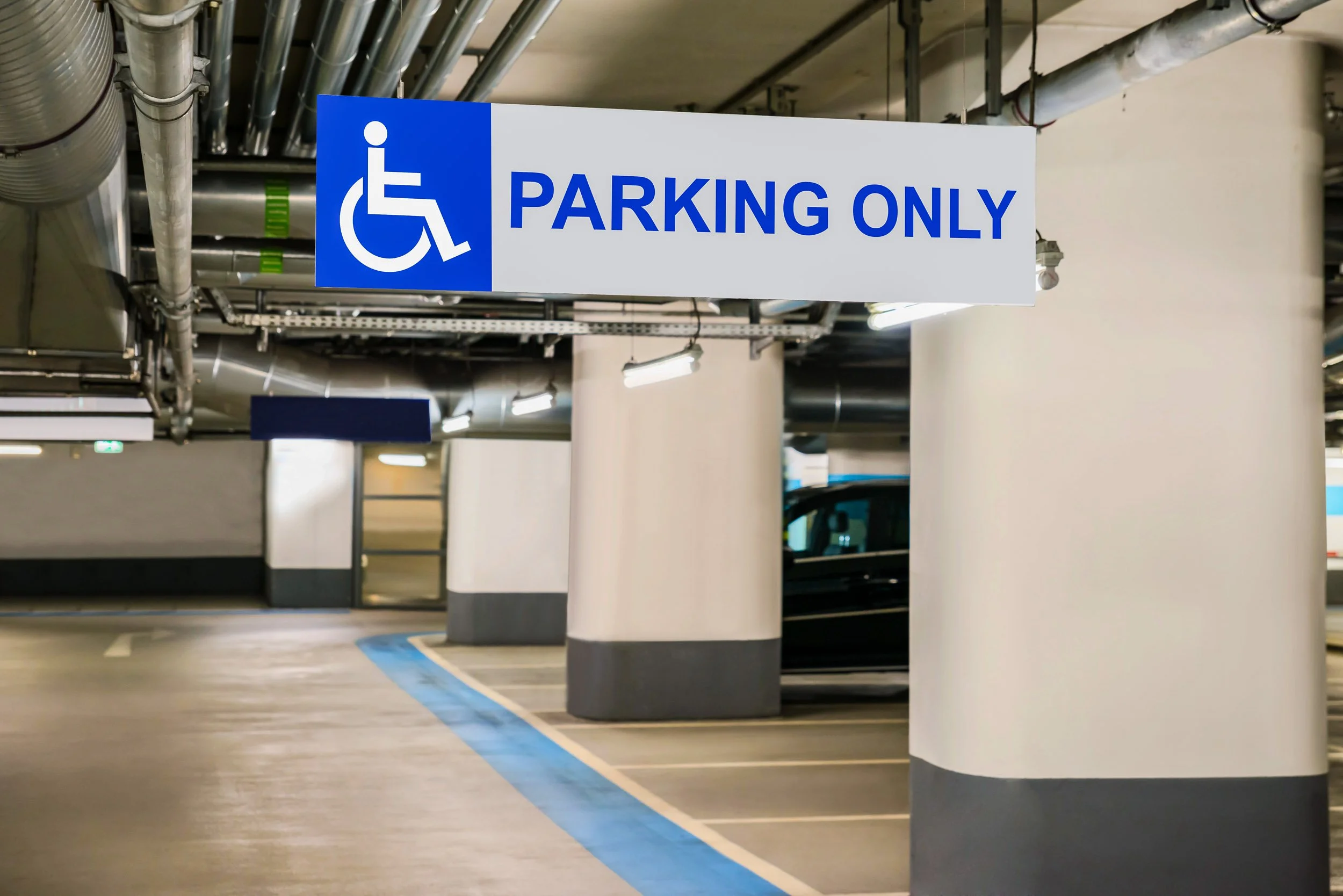
Wording and Symbols - Each accessible space must display the International Symbol of Accessibility – a white wheelchair on a blue background. Van-accessible spaces must include additional “Van Accessible” text.
Durability and Reflectivity - Signs must be weather-resistant and visible both day and night. Reflective materials are recommended, especially for outdoor lots.
Best Practices for Compliance
Staying in compliance requires an understanding of the regulations, as well as some maintenance. Even the most carefully designed parking space can become non-compliant if the signage is not installed correctly or maintained over time.
To maintain compliance, signs must remain visible. Make sure signs are not blocked by trees, vehicles, or snow. Periodically inspect signs for fading, rust, vandalism, or damage, especially after Ohio’s harsh winters.
If your parking facility signs were installed years ago, they may no longer meet current compliance standards. Upgrading older signs ensures compliance and accessibility.
Ohio Enforcement
ADA compliance is enforced by various authorities. During permitting and inspections, enforcement is handled by local building departments. Fines for non-compliance are issued by the U.S. Department of Justice (DOJ). Individuals affected by barriers to accessibility can file private lawsuits and sue through the court system.
Proactively addressing ADA signage prevents legal trouble and makes your property more welcoming and inclusive. A win for your business and the community.
ADA Signage Requirements and Compliance Is More Than Just a Regulatory Check Box
ADA compliance is a way to embrace and foster inclusion and show that your business or public space welcomes everyone.
Following ADA signage standards helps Columbus parking lot owners and managers avoid liability and improve the overall experience for visitors, customers, and employees. If you’re unsure if your parking lot signage meets ADA parking requirements, now is the time to speak with a parking professional and schedule an audit.
At The Super Stripers, our mission is to provide unparalleled parking lot striping services with a focus on reliability, friendliness, and uncompromising quality. We are dedicated to enhancing the appearance, safety, and organization of parking facilities and other line-marking services, such as parking garages, athletic courts, warehouses, and more.\
With attention to detail and a commitment to excellence, we aim to be the trusted partner for all your parking lot striping needs. If you are in Columbus or Central Ohio, please call (614) 648-0799 or email contact@superstripers.com for more information. We are locally owned and fully insured and look forward to working with you.